The Commerce Commission released Guidelines for Green Marketing and Guidelines for Carbon Claims to help those wanting to use green claims in marketing comply with the Fair Trading Act, see here.
Landcare Research has released a short guide for NZ producers on Eco-labels.
For those interested in the current state of affairs of Eco-labels there is a concise summary prepared by SustainAbility here.
Sunday, 25 March 2012

Avoiding Greenwash
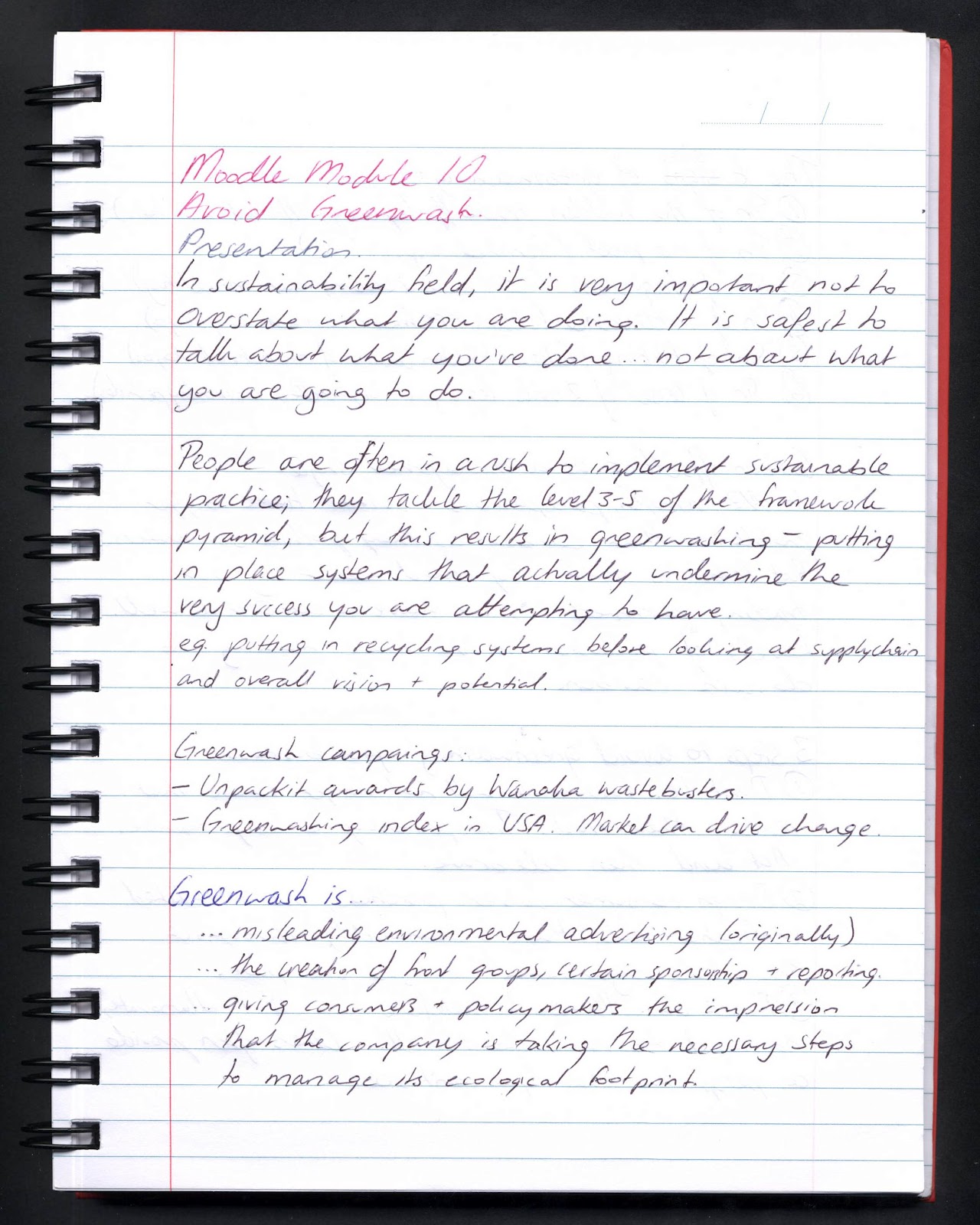

Greenwashing annoys plenty of consumers, so they've made some videos to explain to the rest of us:
And staying on the theme of doing-green-things-that-aren't-so-green:
Never underestimate the power of metaphor... because that's what these two lads are doing to show us how silly offsetting our bad actions is in principle!.
When is it Okay to say you are green? is a recent Celsias article on greenwashing in the NZ context.
Behavioural Economics and Behaviour Change
Alana Cornforth published a paper titled Behaviour Change: Insights for Environmental Policy Making from Social Psychology and Behavioural Economics in the Policy Quarterly in 2009.
This is what I would describe as vital reading for anyone who is in the business of persuading others.
Since it is available online I won't repeat it here but to give a bit more of an overview: she explains that neoclassical economics claimed to know how people would behave, but yet again it relies on assumptions that do not hold up in the real world, so it fell upon the new branch of behavioural economics to investigate human nature in decision making. Overall, it is set in the context of getting the masses to care about the(ir) environment.
This is what I would describe as vital reading for anyone who is in the business of persuading others.
Since it is available online I won't repeat it here but to give a bit more of an overview: she explains that neoclassical economics claimed to know how people would behave, but yet again it relies on assumptions that do not hold up in the real world, so it fell upon the new branch of behavioural economics to investigate human nature in decision making. Overall, it is set in the context of getting the masses to care about the(ir) environment.


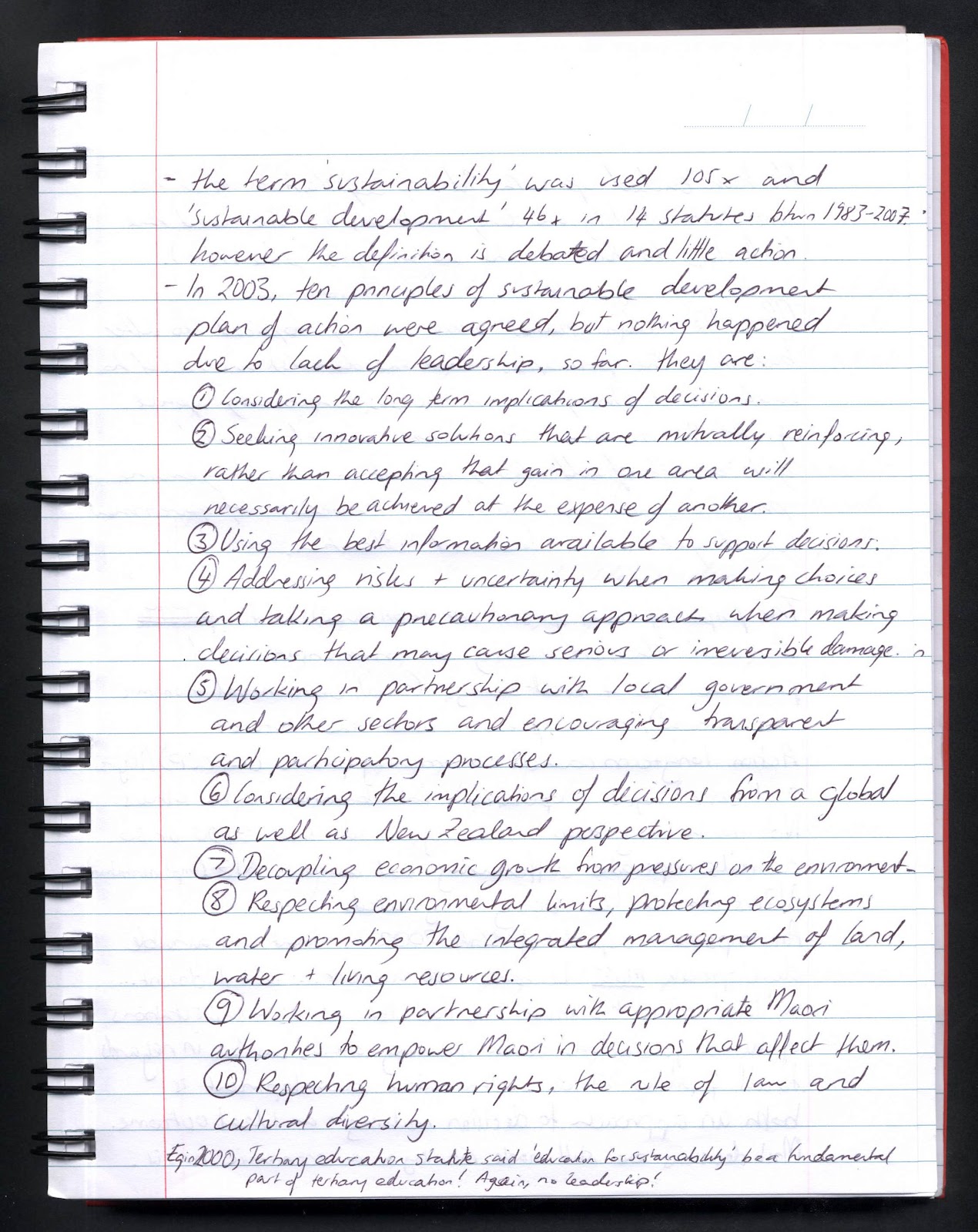

Limits to Growth
In 1972, Dennis Meadows, Jorgen Randers and Donella Meadows published Limits to Growth, outlining why the economy cannot continue to grow forever in a world of finite resources.
in 2002 they published A Synopsis: Limits to Growth: The 30-Year Update. I haven't read the original yet so I can only comment on the more recent document in detail. It is now 40 years since the original book and just last week I came across an interview with Dennis Meadows last week titled 'Is it too late for sustainable development?'.
No wonder he feels jaded, having suffered the fate (one that many scientists can relate to) of doing some important work that then largely went ignored. It just shows how important effective communication is! His book was quite a success; but only some people read books, and only a subset of those read non-fiction books, and only a few on this topic. Many different mediums would yield wider exposure, and now we have 21st century communication as another string in the bow. Social media has released creativity, and so now we get things like this video, which combine the appreciation of rap with economic theory:
Back to the topic...
Scientists are still not giving up though; very recently, thousands of them met in London for the first Planet under Pressure conference, where they came up with the first State of the Planet Declaration. Serious stuff!
Soon we have the Rio+20 meeting coming up. In the lead up, many famous experts are making comments to stimulate the sense of urgency to the leaders who will be discussing our biggest issues there. One of their latest is Our Scarcest Resource is Time. Featured on it is Lester Brown, and I came across a video of him speaking on the 40th anniversary of Limits to Growth where he shares his thoughts:
He speaks about how the combination of all the world's current issues is placing us on a knife edge where an even greater recession could be sparked at any time. I found his example of the Moscow heat wave in 2010 (40 million tons harvest grain lost) in comparison to a hypothetical Chicago heat wave scenario quite sobering (in short, it would be ~4x worse in regards to grain loss). Considering the grain market chaos we had with the former, the latter would be horrendous. The concept of politics of food scarcity (think: restricted imports/exports, land-grabs and manipulative leveraging by governments) makes me fear for my New Zealand (even though at this stage we are still so well off relative to most other countries!). In his opinion, the food economy is the most likely system to break since farmers are dealing with the perfect storm of water shortage (as we are living in demand overshoot), climate change, and unsustainable agriculture methods. The reason it is so dangerous is because "one of the things people expect of their government is food security, if they do not supply this then they lose their legitimacy and this becomes a major source of instability of failing states". He mentions Plan B, which he developed through his Earth Policy Institute, as involving: the cutting of carbon emissions by 80% by 2020 (and he gives some good examples), stabilizing the population at 8 billion by filling the last family planning gaps, eradication of poverty (closely linked to population stabilization), and restoring the natural support systems of earth (e.g. forests, soils, fisheries, etc). He has calculated that doing the last three of these would cost $200b/yr and makes reference to the US military budget of $700b/yr saying "we can avoid the collapse if we want to" if we redefine security from its previous century definition (i.e. war-focussed) to our current principal threats that affect the global village and do what needs to be done to achieve the main objectives. In essence, this talk is simply another call for courageous leadership from the top.
in 2002 they published A Synopsis: Limits to Growth: The 30-Year Update. I haven't read the original yet so I can only comment on the more recent document in detail. It is now 40 years since the original book and just last week I came across an interview with Dennis Meadows last week titled 'Is it too late for sustainable development?'.
No wonder he feels jaded, having suffered the fate (one that many scientists can relate to) of doing some important work that then largely went ignored. It just shows how important effective communication is! His book was quite a success; but only some people read books, and only a subset of those read non-fiction books, and only a few on this topic. Many different mediums would yield wider exposure, and now we have 21st century communication as another string in the bow. Social media has released creativity, and so now we get things like this video, which combine the appreciation of rap with economic theory:
Back to the topic...
Scientists are still not giving up though; very recently, thousands of them met in London for the first Planet under Pressure conference, where they came up with the first State of the Planet Declaration. Serious stuff!
Soon we have the Rio+20 meeting coming up. In the lead up, many famous experts are making comments to stimulate the sense of urgency to the leaders who will be discussing our biggest issues there. One of their latest is Our Scarcest Resource is Time. Featured on it is Lester Brown, and I came across a video of him speaking on the 40th anniversary of Limits to Growth where he shares his thoughts:
He speaks about how the combination of all the world's current issues is placing us on a knife edge where an even greater recession could be sparked at any time. I found his example of the Moscow heat wave in 2010 (40 million tons harvest grain lost) in comparison to a hypothetical Chicago heat wave scenario quite sobering (in short, it would be ~4x worse in regards to grain loss). Considering the grain market chaos we had with the former, the latter would be horrendous. The concept of politics of food scarcity (think: restricted imports/exports, land-grabs and manipulative leveraging by governments) makes me fear for my New Zealand (even though at this stage we are still so well off relative to most other countries!). In his opinion, the food economy is the most likely system to break since farmers are dealing with the perfect storm of water shortage (as we are living in demand overshoot), climate change, and unsustainable agriculture methods. The reason it is so dangerous is because "one of the things people expect of their government is food security, if they do not supply this then they lose their legitimacy and this becomes a major source of instability of failing states". He mentions Plan B, which he developed through his Earth Policy Institute, as involving: the cutting of carbon emissions by 80% by 2020 (and he gives some good examples), stabilizing the population at 8 billion by filling the last family planning gaps, eradication of poverty (closely linked to population stabilization), and restoring the natural support systems of earth (e.g. forests, soils, fisheries, etc). He has calculated that doing the last three of these would cost $200b/yr and makes reference to the US military budget of $700b/yr saying "we can avoid the collapse if we want to" if we redefine security from its previous century definition (i.e. war-focussed) to our current principal threats that affect the global village and do what needs to be done to achieve the main objectives. In essence, this talk is simply another call for courageous leadership from the top.
Genuine Progress Index
Here is a really good short video to explain the concept of the Genuine Progress Index (or Indicator):
He's a very good orator, thank goodness - when there are good ideas that's what we need! He speaks very well about why a GPI is important but I'm already converted ... I'm really keen to find out how it's calculated!
I'll check out the GPI Atlantic website soon.
Also worth checking out is the New Economics Foundation.
The UN is encouraging the update of progress indicators that focus on happiness as opposed to economic activity, this article the UN Embraces the Economics of Happiness shows they are quite serious about it, here's the intro:
"Imagine, in short, a world where the metric that guides our decisions is not money, but happiness. That is the future that 650 political, academic, and civic leaders from around the world came together to promote on April 2, 2012. Encouraged by the government of Bhutan, the United Nations held a High Level Meeting for Wellbeing and Happiness: Defining a New Economic Paradigm. The meeting marks the launch of a global movement to shift our focus away from measuring and promoting economic growth as a goal in its own right, and toward the goal of measuring—and increasing—human happiness and quality of life."
He's a very good orator, thank goodness - when there are good ideas that's what we need! He speaks very well about why a GPI is important but I'm already converted ... I'm really keen to find out how it's calculated!
I'll check out the GPI Atlantic website soon.
Also worth checking out is the New Economics Foundation.
The UN is encouraging the update of progress indicators that focus on happiness as opposed to economic activity, this article the UN Embraces the Economics of Happiness shows they are quite serious about it, here's the intro:
"Imagine, in short, a world where the metric that guides our decisions is not money, but happiness. That is the future that 650 political, academic, and civic leaders from around the world came together to promote on April 2, 2012. Encouraged by the government of Bhutan, the United Nations held a High Level Meeting for Wellbeing and Happiness: Defining a New Economic Paradigm. The meeting marks the launch of a global movement to shift our focus away from measuring and promoting economic growth as a goal in its own right, and toward the goal of measuring—and increasing—human happiness and quality of life."
The Eurozone Debt Crisis and the History of Economics
Such a depressing topic, for those who like it serious here is a visual representation, and for those that like the edge taken off with humour, here's the skit version:
The history of how our economic system arose and how we haven't fixed it even after we realised its limitations (a very long time ago) is an interesting story I suggest finding on the web. I plan to read and reflect on Chapter 7 Our Economy and the Governance of Our Commons in Strategic Leadership towards Sustainability sometime soon and I'll fill in what I learn from that here.
As a quick overall summary off the top of my head at the moment: our economic system doesn't account for the whole picture (e.g. environmental and social costs are usually externalised) and we measure our success based on a statistic that is woefully inadequate and was never intended for its current application; that statistic is GDP (the Gross Domestic Product) or otherwise referred to as GNP (Gross National Product). Simply put, it measures spending. This spending can be on things we consider positive or negative but as long as there is action and we are all spending more this number and representatively our economy grows. However, it is NOT an adequate measure of success because humans define success as positive (and sometime intangible things) such as health, good education, good relationships, and so on. Therefore we need a new measure, a GPI (Genuine Progress Indicator).
The history of how our economic system arose and how we haven't fixed it even after we realised its limitations (a very long time ago) is an interesting story I suggest finding on the web. I plan to read and reflect on Chapter 7 Our Economy and the Governance of Our Commons in Strategic Leadership towards Sustainability sometime soon and I'll fill in what I learn from that here.
As a quick overall summary off the top of my head at the moment: our economic system doesn't account for the whole picture (e.g. environmental and social costs are usually externalised) and we measure our success based on a statistic that is woefully inadequate and was never intended for its current application; that statistic is GDP (the Gross Domestic Product) or otherwise referred to as GNP (Gross National Product). Simply put, it measures spending. This spending can be on things we consider positive or negative but as long as there is action and we are all spending more this number and representatively our economy grows. However, it is NOT an adequate measure of success because humans define success as positive (and sometime intangible things) such as health, good education, good relationships, and so on. Therefore we need a new measure, a GPI (Genuine Progress Indicator).


The Mauri Model - a Tangata Whenua perspective on sustainability
The paper A Tangata Whenua Perspective on Sustainability using the Mauri Model: Towards decision making balance with regard to our social, economic, environmental and cultural well-being by Te Kipa Kepa Brian Morgan (Senior Lecturer of Civil & Environmental Engineering at the University of Auckland) which he presented at the International Conference on Sustainability Engineering and Science in 2004 was a really easy and enlightening read.
Every time I come across the Maori story of creation or their concepts of Mauri (the core essence and life force of all things) and Whanaugatanga (belonging to the land) I feel like it makes sense to me. As I read this paper I thought it wouldn't be too hard to reframe some of the content to help get more people on board with the concepts. In the introduction he speaks of the nonsensical decisions sometimes made still with regards to the Resource Management Act 1991. It made me think back to when I was growing up in Whangamata, for many years witnessing snippets of the do-we-get-a-marina debate. I often heard the negative comments from certain parts of the community of how Maori stand in the way of progress. I remember doing a social-studies project on the topic sometime in my very early teens; I already had a great appreciation for nature but felt inadequately aware of the social and economic potential of the project, so I had difficulty forming a conclusion. Today, the marina is up and running and I have been too out of the loop to hear whether the pros and cons eventuated - but I hear the surf bar is still going strong (one of the biggest fears the townspeople had).
The purpose of the paper is to introduce the concept of the Mauri model, which is based on four circles that represent the interdependence of economics (Mauri of whanau) on society (Mauri of community) on culture (Mauri of hapu) on the integrity of the ecosystem (Mauri of the environment). So this thinking is totally the same as the strong sustainability models encountered in earlier blog posts. The idea put forth is to use this model, along with ratings, to be able to make good decisions in regards to resource-use. The conclusions are blunt to point out that economic well-being has recently been our most important criteria and that our appreciation of the importance of the social, cultural and environmental well-being needs to grow even further.
Think about it, it is now 10 years since this paper was presented! With minor tweaks it would be just as relevant to whip it out at any next conference!
Every time I come across the Maori story of creation or their concepts of Mauri (the core essence and life force of all things) and Whanaugatanga (belonging to the land) I feel like it makes sense to me. As I read this paper I thought it wouldn't be too hard to reframe some of the content to help get more people on board with the concepts. In the introduction he speaks of the nonsensical decisions sometimes made still with regards to the Resource Management Act 1991. It made me think back to when I was growing up in Whangamata, for many years witnessing snippets of the do-we-get-a-marina debate. I often heard the negative comments from certain parts of the community of how Maori stand in the way of progress. I remember doing a social-studies project on the topic sometime in my very early teens; I already had a great appreciation for nature but felt inadequately aware of the social and economic potential of the project, so I had difficulty forming a conclusion. Today, the marina is up and running and I have been too out of the loop to hear whether the pros and cons eventuated - but I hear the surf bar is still going strong (one of the biggest fears the townspeople had).
The purpose of the paper is to introduce the concept of the Mauri model, which is based on four circles that represent the interdependence of economics (Mauri of whanau) on society (Mauri of community) on culture (Mauri of hapu) on the integrity of the ecosystem (Mauri of the environment). So this thinking is totally the same as the strong sustainability models encountered in earlier blog posts. The idea put forth is to use this model, along with ratings, to be able to make good decisions in regards to resource-use. The conclusions are blunt to point out that economic well-being has recently been our most important criteria and that our appreciation of the importance of the social, cultural and environmental well-being needs to grow even further.
Think about it, it is now 10 years since this paper was presented! With minor tweaks it would be just as relevant to whip it out at any next conference!
The Social Role of Business
This morning I skimmed through The Social Role of Business, Snapshot 2010: Stories of business engagement in the social space, and Business Guide: Engaging in Corporate Social Responsibility, all published by the NZ Business Council for Sustainable Development.
The theme was on 'businesses can't succeed in societies that fail' and really rallied for business to be included at the table of government and non-governmental organisations when they discuss solutions for social issues. I agree with them, they have the resources and expertise (through a different lens) to really get involved in those discussions... after all, they are usually also the most efficient entities for getting things done! The higher the urgency of changes needed gets the more I tend to want to stress this point. Having gone through the first wave of the concept of Corporate Social Responsibility (the very tame version of what is really needed) they are also open to real engagement; I think we have mostly all moved past thinking just throwing money at the problem solves things, no?! Really thinking things through, getting at root causes, and having all three sectors of society engaging is our best hope for adopting systems that will head the issues in the right direction.
One of the larger think tanks out there working to combining the three sectors to achieve sustainable development is Forum for the Future.
The theme was on 'businesses can't succeed in societies that fail' and really rallied for business to be included at the table of government and non-governmental organisations when they discuss solutions for social issues. I agree with them, they have the resources and expertise (through a different lens) to really get involved in those discussions... after all, they are usually also the most efficient entities for getting things done! The higher the urgency of changes needed gets the more I tend to want to stress this point. Having gone through the first wave of the concept of Corporate Social Responsibility (the very tame version of what is really needed) they are also open to real engagement; I think we have mostly all moved past thinking just throwing money at the problem solves things, no?! Really thinking things through, getting at root causes, and having all three sectors of society engaging is our best hope for adopting systems that will head the issues in the right direction.
One of the larger think tanks out there working to combining the three sectors to achieve sustainable development is Forum for the Future.
Subscribe to:
Posts (Atom)