Another plenary talk that deserves its own blog post was the presentation by Associate Professor Susan Krumdieck from Canterbury University. She was a fantastically engaging and natural presenter that managed to bring the science right down to everyones level of understanding; which as a scientist myself I always find fascinating! Here is a video of her talk.
Her line of expertise is Transition Engineering (i.e. sustainability + mechanical engineering). She and her PhD students have been investigating peak oil vulnerability for NZ cities, especially in regards to transport, by looking at activity and how adaptive our capacity is. Land-use patterns were identified as the most determining factor, as this is what our transport network sits upon and then leads to our behavioural decisions.
She has some great points of view to share, e.g. "It is irrational NOT to drive a car if a nice road has been provided and a nice car is affordable to you" - this comment really shapes how I will view the behaviour of others in the future, she just put it so eloquently!
Her team also evaluated all of the transport solutions that could help us reach the goal of 50% oil-use-reduction that is required (according to 97% of geologists; must find the meta-study that claims this) and identified the low-carbon lifestyle as the surest way to get there, as opposed to biofuels and electric cars and so on. But for this to be a rational option our urban planning has to be done right, so we go back to having more urban villages and/or better public transport.
For anyone who wants to learn more, here is a link to her publications and a great NZTA report.
Sunday, 22 April 2012

Saturday, 21 April 2012
Nicole Foss on Peak Finance and Peak Energy
The first plenary talk was given by Nicole Foss on peak finance and energy, i.e. preparing for the economic crisis - quite the doom and gloom story! Here's a few snippets of what I picked up on:
To set the scene, Nicole talked about finance being the main driver of our crises, closely followed by energy. She explained the pyramid dynamics of the global financial bubble(s) which created the perception of increasing wealth, with a positive feedback loop (based on hope and greed, i.e. when we borrow for consumption and gambling instead of value creation), and their tendency to collapse, via a negative feedback loop (based on fear, i.e. when debts fail to get serviced). She focussed on the availability of money and its effect on price and affordability; e.g. with an increase in money available, assets get overvalued until price discovery eventually revalues them - although unfortunately affordability is always a step behind as society adjusts. The theme she wanted to get across is: we have the biggest collapse coming up still, no one is able to stop it (governments are always a step behind and kicking the issue along) and so we better prepare to weather it as best we can. It is really unfortunate that in the aim to keep the money circulating our environment keeps getting the raw end of the deal over and over - with 7 billion people this could be really messy! Nothing we all haven't thought about before, aye!? It's disappointing to know that these bubbles have happened before and we haven't learned our lesson(s). Her estimations put the undershoot that happens right after the steep nosedive (everyone is trying to delay) for this one at 1970's price levels - wow, imagine that!
On energy, she spoke about peak-conventional oil and explained our ever decreasing net-energy (i.e. the ratio of energy in:out) and how we will eventually be forced to simplify. A great comment was "we will never run out of oil completely on earth, but there will always be less" which is clear about the fact our futures will be different to what we currently consider conventional. "Lets get our expectations in line with reality!" and "we can rediscover what makes people happy".
She briefly talked about the psychology of economic contractions and outlined it as the increase of fear and anger (often leading to a pointless blame game and shortened time horizon thinking), leading to lack of trust, trade wars and protectionism, then deglobalisation. The centralisation of power that happened during globalisation is difficult to take back to the local level, essentially the only solution she mentioned was to use the power in numbers, i.e. don't leave courageous visionaries vulnerable, if enough people do it at once it is very difficult to stop.
Nicole has looked at the NZ situation and identifies us as vulnerable due to the large housing bubble, and high household debt (e.g. mortgages) which makes citizens very sensitive to interest rate rises. Also, we are a resource export economy, very vulnerable to international trade and demand, and long supply chains for our imports. The global commodity bubble supports our dollar value, but in time our domestic stuff is likely going to be cheaper than overseas products, the better we get at weaning off essential-item imports the less leverage others might have over us. NZ also has mainly foreign owned banks, of places which have big issues of their own, it might be good to know about alternative ways of banking. NZ's comfortable lifestyle gives us a very high complacency atmosphere - probably our biggest hurdle. Disentangling from the global system was cited as our best way forward and biggest challenge. I personally have always had hope that NZ could become a self-sufficient resilient nation. One thing she was very clear on is that we can't expect any of our media and government to be warning us, they are busy trying to halt the 'fear', so we cannot expect them to come up with the solutions top-down. We need to take responsibility here and get ready so that we can help others bridge the gap when the time comes. Her suggestions to us the attendees were: eliminate the dependence on credit, minimize debt, move into value goods, productive land, low-tech transportation, invest in the fabric of our community and move into depression proof employment.
The sweetest thing was that right after her doom and gloom talk, we got to hear a great uplifting poem (which is one of the first I ever liked, and I'd say has taught me the power of poetry finally). Overall, for the conference it was good for setting the scene as all the other talks had very positive and opportunistic intentions.
To set the scene, Nicole talked about finance being the main driver of our crises, closely followed by energy. She explained the pyramid dynamics of the global financial bubble(s) which created the perception of increasing wealth, with a positive feedback loop (based on hope and greed, i.e. when we borrow for consumption and gambling instead of value creation), and their tendency to collapse, via a negative feedback loop (based on fear, i.e. when debts fail to get serviced). She focussed on the availability of money and its effect on price and affordability; e.g. with an increase in money available, assets get overvalued until price discovery eventually revalues them - although unfortunately affordability is always a step behind as society adjusts. The theme she wanted to get across is: we have the biggest collapse coming up still, no one is able to stop it (governments are always a step behind and kicking the issue along) and so we better prepare to weather it as best we can. It is really unfortunate that in the aim to keep the money circulating our environment keeps getting the raw end of the deal over and over - with 7 billion people this could be really messy! Nothing we all haven't thought about before, aye!? It's disappointing to know that these bubbles have happened before and we haven't learned our lesson(s). Her estimations put the undershoot that happens right after the steep nosedive (everyone is trying to delay) for this one at 1970's price levels - wow, imagine that!
On energy, she spoke about peak-conventional oil and explained our ever decreasing net-energy (i.e. the ratio of energy in:out) and how we will eventually be forced to simplify. A great comment was "we will never run out of oil completely on earth, but there will always be less" which is clear about the fact our futures will be different to what we currently consider conventional. "Lets get our expectations in line with reality!" and "we can rediscover what makes people happy".
She briefly talked about the psychology of economic contractions and outlined it as the increase of fear and anger (often leading to a pointless blame game and shortened time horizon thinking), leading to lack of trust, trade wars and protectionism, then deglobalisation. The centralisation of power that happened during globalisation is difficult to take back to the local level, essentially the only solution she mentioned was to use the power in numbers, i.e. don't leave courageous visionaries vulnerable, if enough people do it at once it is very difficult to stop.
Nicole has looked at the NZ situation and identifies us as vulnerable due to the large housing bubble, and high household debt (e.g. mortgages) which makes citizens very sensitive to interest rate rises. Also, we are a resource export economy, very vulnerable to international trade and demand, and long supply chains for our imports. The global commodity bubble supports our dollar value, but in time our domestic stuff is likely going to be cheaper than overseas products, the better we get at weaning off essential-item imports the less leverage others might have over us. NZ also has mainly foreign owned banks, of places which have big issues of their own, it might be good to know about alternative ways of banking. NZ's comfortable lifestyle gives us a very high complacency atmosphere - probably our biggest hurdle. Disentangling from the global system was cited as our best way forward and biggest challenge. I personally have always had hope that NZ could become a self-sufficient resilient nation. One thing she was very clear on is that we can't expect any of our media and government to be warning us, they are busy trying to halt the 'fear', so we cannot expect them to come up with the solutions top-down. We need to take responsibility here and get ready so that we can help others bridge the gap when the time comes. Her suggestions to us the attendees were: eliminate the dependence on credit, minimize debt, move into value goods, productive land, low-tech transportation, invest in the fabric of our community and move into depression proof employment.
The sweetest thing was that right after her doom and gloom talk, we got to hear a great uplifting poem (which is one of the first I ever liked, and I'd say has taught me the power of poetry finally). Overall, for the conference it was good for setting the scene as all the other talks had very positive and opportunistic intentions.
Thursday, 19 April 2012
Permaculture Convergence 2012
I just came back from an amazing week in Turangi where I attended the Australasian Permaculture Convergence with some of the other Sustainable Practice students. It was only a few months ago that I had to ask them what the term "Permaculture" actually meant :-) The name apparently stems from permanent agriculture or permanent culture, and refers to a sustainable way of growing food and living. Now I think of it as a type of science that sprouted after the realisation that we (humanity) are marginalising and forgetting 'the old way of doing things'.
In true spirit, all of the food we ate was provided by Awhi Farm down the road (organic of course) and various donations. The line up was really impressive and attracted over 500 people! I imagine that many more people would have found it very interesting, its just that its brilliance was hidden under the name few people recognize. More than once I sat there marvelling at the incredible microbiology and nutrient cycling knowledge that was being discussed!
Not surprisingly, there were a few Jesus-look-a-like-most-probably-a-vegan greenies around, and they're all aware how that tends to block adoption of their fascinating information by mainstream. More than that, many wonder how to overcome the issue. One beautiful conclusion that was reached in one of the last panel discussions was that it definitely doesn't require rebranding, but definitely diversification! Leave the pioneers their integrity, but then spread the knowledge under whatever form that fits.
Overall, I only got to experience a tiny slice of all the things on offer at the conference (since there were usually 10 sessions running concurrently at any one time). Topics included: local currency design and timebanking, waste management, deep ecology, co-operative business structures, eco-village examples, food self-reliance, terraquaculture, scything, biochar, seed saving, regenerative agriculture and soil health for food and human health, urban permaculture design, edible food forests (I love this concept and plan to erect one on my parents property - more updates on that once I have started the design), fermentation of foods, the natural step framework, hempology, composting toilets, how to grow mushrooms, emergency response examples, natural burials, indigenous foods, eco-schools, permaculture education systems, and more. I'll have to write separate posts on my favourite plenary talks.
The best highlight was getting to meet so many kind and interesting people with big dreams, it was really really really quite fun! ;-)
In true spirit, all of the food we ate was provided by Awhi Farm down the road (organic of course) and various donations. The line up was really impressive and attracted over 500 people! I imagine that many more people would have found it very interesting, its just that its brilliance was hidden under the name few people recognize. More than once I sat there marvelling at the incredible microbiology and nutrient cycling knowledge that was being discussed!
Not surprisingly, there were a few Jesus-look-a-like-most-probably-a-vegan greenies around, and they're all aware how that tends to block adoption of their fascinating information by mainstream. More than that, many wonder how to overcome the issue. One beautiful conclusion that was reached in one of the last panel discussions was that it definitely doesn't require rebranding, but definitely diversification! Leave the pioneers their integrity, but then spread the knowledge under whatever form that fits.
Overall, I only got to experience a tiny slice of all the things on offer at the conference (since there were usually 10 sessions running concurrently at any one time). Topics included: local currency design and timebanking, waste management, deep ecology, co-operative business structures, eco-village examples, food self-reliance, terraquaculture, scything, biochar, seed saving, regenerative agriculture and soil health for food and human health, urban permaculture design, edible food forests (I love this concept and plan to erect one on my parents property - more updates on that once I have started the design), fermentation of foods, the natural step framework, hempology, composting toilets, how to grow mushrooms, emergency response examples, natural burials, indigenous foods, eco-schools, permaculture education systems, and more. I'll have to write separate posts on my favourite plenary talks.
The best highlight was getting to meet so many kind and interesting people with big dreams, it was really really really quite fun! ;-)
Sunday, 25 March 2012
Ecolabels in NZ
The Commerce Commission released Guidelines for Green Marketing and Guidelines for Carbon Claims to help those wanting to use green claims in marketing comply with the Fair Trading Act, see here.
Landcare Research has released a short guide for NZ producers on Eco-labels.
For those interested in the current state of affairs of Eco-labels there is a concise summary prepared by SustainAbility here.
Landcare Research has released a short guide for NZ producers on Eco-labels.
For those interested in the current state of affairs of Eco-labels there is a concise summary prepared by SustainAbility here.
Avoiding Greenwash
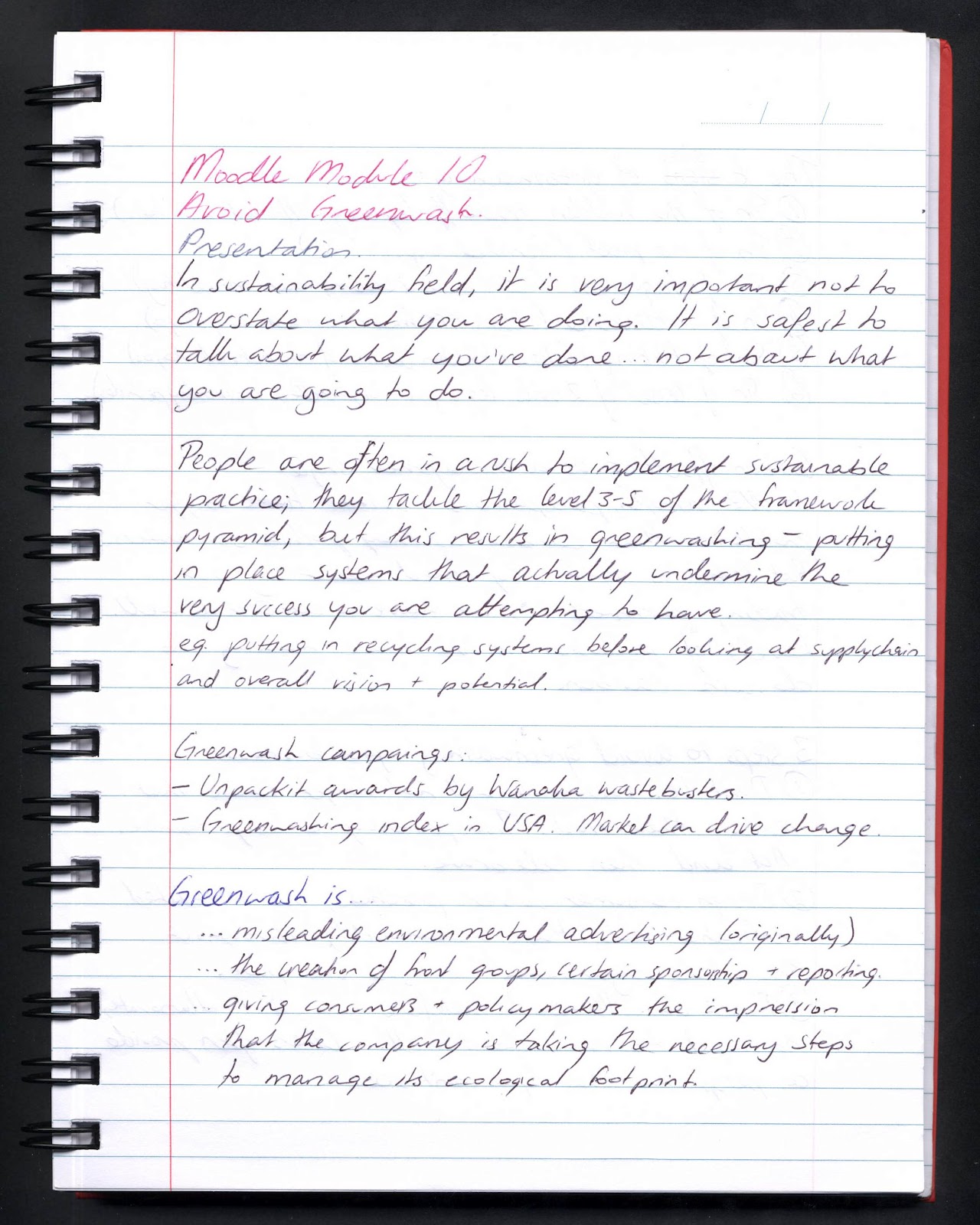

Greenwashing annoys plenty of consumers, so they've made some videos to explain to the rest of us:
And staying on the theme of doing-green-things-that-aren't-so-green:
Never underestimate the power of metaphor... because that's what these two lads are doing to show us how silly offsetting our bad actions is in principle!.
When is it Okay to say you are green? is a recent Celsias article on greenwashing in the NZ context.
Behavioural Economics and Behaviour Change
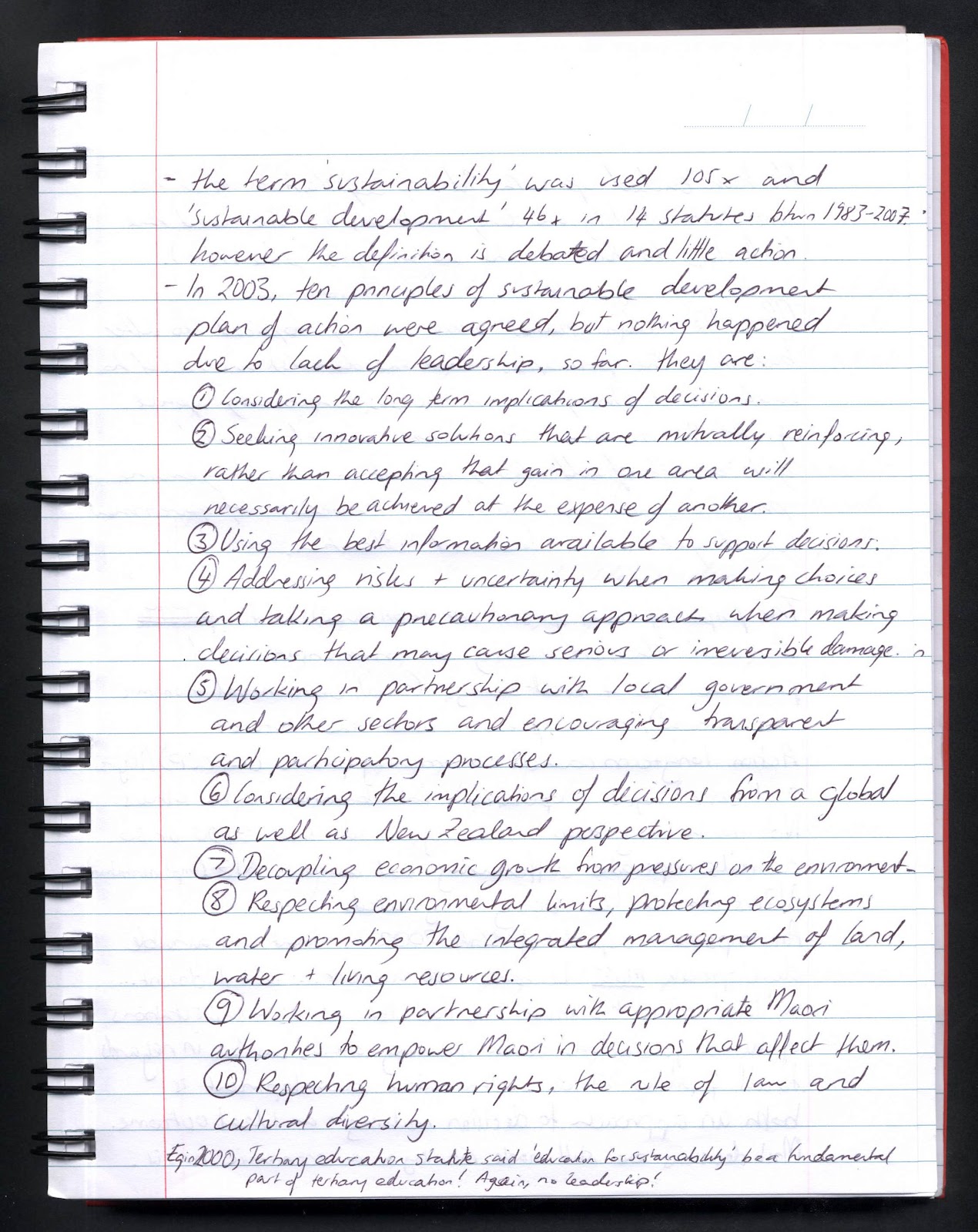
Alana Cornforth published a paper titled Behaviour Change: Insights for Environmental Policy Making from Social Psychology and Behavioural Economics in the Policy Quarterly in 2009.
This is what I would describe as vital reading for anyone who is in the business of persuading others.
Since it is available online I won't repeat it here but to give a bit more of an overview: she explains that neoclassical economics claimed to know how people would behave, but yet again it relies on assumptions that do not hold up in the real world, so it fell upon the new branch of behavioural economics to investigate human nature in decision making. Overall, it is set in the context of getting the masses to care about the(ir) environment.
This is what I would describe as vital reading for anyone who is in the business of persuading others.
Since it is available online I won't repeat it here but to give a bit more of an overview: she explains that neoclassical economics claimed to know how people would behave, but yet again it relies on assumptions that do not hold up in the real world, so it fell upon the new branch of behavioural economics to investigate human nature in decision making. Overall, it is set in the context of getting the masses to care about the(ir) environment.



Limits to Growth
In 1972, Dennis Meadows, Jorgen Randers and Donella Meadows published Limits to Growth, outlining why the economy cannot continue to grow forever in a world of finite resources.
in 2002 they published A Synopsis: Limits to Growth: The 30-Year Update. I haven't read the original yet so I can only comment on the more recent document in detail. It is now 40 years since the original book and just last week I came across an interview with Dennis Meadows last week titled 'Is it too late for sustainable development?'.
No wonder he feels jaded, having suffered the fate (one that many scientists can relate to) of doing some important work that then largely went ignored. It just shows how important effective communication is! His book was quite a success; but only some people read books, and only a subset of those read non-fiction books, and only a few on this topic. Many different mediums would yield wider exposure, and now we have 21st century communication as another string in the bow. Social media has released creativity, and so now we get things like this video, which combine the appreciation of rap with economic theory:
Back to the topic...
Scientists are still not giving up though; very recently, thousands of them met in London for the first Planet under Pressure conference, where they came up with the first State of the Planet Declaration. Serious stuff!
Soon we have the Rio+20 meeting coming up. In the lead up, many famous experts are making comments to stimulate the sense of urgency to the leaders who will be discussing our biggest issues there. One of their latest is Our Scarcest Resource is Time. Featured on it is Lester Brown, and I came across a video of him speaking on the 40th anniversary of Limits to Growth where he shares his thoughts:
He speaks about how the combination of all the world's current issues is placing us on a knife edge where an even greater recession could be sparked at any time. I found his example of the Moscow heat wave in 2010 (40 million tons harvest grain lost) in comparison to a hypothetical Chicago heat wave scenario quite sobering (in short, it would be ~4x worse in regards to grain loss). Considering the grain market chaos we had with the former, the latter would be horrendous. The concept of politics of food scarcity (think: restricted imports/exports, land-grabs and manipulative leveraging by governments) makes me fear for my New Zealand (even though at this stage we are still so well off relative to most other countries!). In his opinion, the food economy is the most likely system to break since farmers are dealing with the perfect storm of water shortage (as we are living in demand overshoot), climate change, and unsustainable agriculture methods. The reason it is so dangerous is because "one of the things people expect of their government is food security, if they do not supply this then they lose their legitimacy and this becomes a major source of instability of failing states". He mentions Plan B, which he developed through his Earth Policy Institute, as involving: the cutting of carbon emissions by 80% by 2020 (and he gives some good examples), stabilizing the population at 8 billion by filling the last family planning gaps, eradication of poverty (closely linked to population stabilization), and restoring the natural support systems of earth (e.g. forests, soils, fisheries, etc). He has calculated that doing the last three of these would cost $200b/yr and makes reference to the US military budget of $700b/yr saying "we can avoid the collapse if we want to" if we redefine security from its previous century definition (i.e. war-focussed) to our current principal threats that affect the global village and do what needs to be done to achieve the main objectives. In essence, this talk is simply another call for courageous leadership from the top.
in 2002 they published A Synopsis: Limits to Growth: The 30-Year Update. I haven't read the original yet so I can only comment on the more recent document in detail. It is now 40 years since the original book and just last week I came across an interview with Dennis Meadows last week titled 'Is it too late for sustainable development?'.
No wonder he feels jaded, having suffered the fate (one that many scientists can relate to) of doing some important work that then largely went ignored. It just shows how important effective communication is! His book was quite a success; but only some people read books, and only a subset of those read non-fiction books, and only a few on this topic. Many different mediums would yield wider exposure, and now we have 21st century communication as another string in the bow. Social media has released creativity, and so now we get things like this video, which combine the appreciation of rap with economic theory:
Back to the topic...
Scientists are still not giving up though; very recently, thousands of them met in London for the first Planet under Pressure conference, where they came up with the first State of the Planet Declaration. Serious stuff!
Soon we have the Rio+20 meeting coming up. In the lead up, many famous experts are making comments to stimulate the sense of urgency to the leaders who will be discussing our biggest issues there. One of their latest is Our Scarcest Resource is Time. Featured on it is Lester Brown, and I came across a video of him speaking on the 40th anniversary of Limits to Growth where he shares his thoughts:
He speaks about how the combination of all the world's current issues is placing us on a knife edge where an even greater recession could be sparked at any time. I found his example of the Moscow heat wave in 2010 (40 million tons harvest grain lost) in comparison to a hypothetical Chicago heat wave scenario quite sobering (in short, it would be ~4x worse in regards to grain loss). Considering the grain market chaos we had with the former, the latter would be horrendous. The concept of politics of food scarcity (think: restricted imports/exports, land-grabs and manipulative leveraging by governments) makes me fear for my New Zealand (even though at this stage we are still so well off relative to most other countries!). In his opinion, the food economy is the most likely system to break since farmers are dealing with the perfect storm of water shortage (as we are living in demand overshoot), climate change, and unsustainable agriculture methods. The reason it is so dangerous is because "one of the things people expect of their government is food security, if they do not supply this then they lose their legitimacy and this becomes a major source of instability of failing states". He mentions Plan B, which he developed through his Earth Policy Institute, as involving: the cutting of carbon emissions by 80% by 2020 (and he gives some good examples), stabilizing the population at 8 billion by filling the last family planning gaps, eradication of poverty (closely linked to population stabilization), and restoring the natural support systems of earth (e.g. forests, soils, fisheries, etc). He has calculated that doing the last three of these would cost $200b/yr and makes reference to the US military budget of $700b/yr saying "we can avoid the collapse if we want to" if we redefine security from its previous century definition (i.e. war-focussed) to our current principal threats that affect the global village and do what needs to be done to achieve the main objectives. In essence, this talk is simply another call for courageous leadership from the top.
Genuine Progress Index
Here is a really good short video to explain the concept of the Genuine Progress Index (or Indicator):
He's a very good orator, thank goodness - when there are good ideas that's what we need! He speaks very well about why a GPI is important but I'm already converted ... I'm really keen to find out how it's calculated!
I'll check out the GPI Atlantic website soon.
Also worth checking out is the New Economics Foundation.
The UN is encouraging the update of progress indicators that focus on happiness as opposed to economic activity, this article the UN Embraces the Economics of Happiness shows they are quite serious about it, here's the intro:
"Imagine, in short, a world where the metric that guides our decisions is not money, but happiness. That is the future that 650 political, academic, and civic leaders from around the world came together to promote on April 2, 2012. Encouraged by the government of Bhutan, the United Nations held a High Level Meeting for Wellbeing and Happiness: Defining a New Economic Paradigm. The meeting marks the launch of a global movement to shift our focus away from measuring and promoting economic growth as a goal in its own right, and toward the goal of measuring—and increasing—human happiness and quality of life."
He's a very good orator, thank goodness - when there are good ideas that's what we need! He speaks very well about why a GPI is important but I'm already converted ... I'm really keen to find out how it's calculated!
I'll check out the GPI Atlantic website soon.
Also worth checking out is the New Economics Foundation.
The UN is encouraging the update of progress indicators that focus on happiness as opposed to economic activity, this article the UN Embraces the Economics of Happiness shows they are quite serious about it, here's the intro:
"Imagine, in short, a world where the metric that guides our decisions is not money, but happiness. That is the future that 650 political, academic, and civic leaders from around the world came together to promote on April 2, 2012. Encouraged by the government of Bhutan, the United Nations held a High Level Meeting for Wellbeing and Happiness: Defining a New Economic Paradigm. The meeting marks the launch of a global movement to shift our focus away from measuring and promoting economic growth as a goal in its own right, and toward the goal of measuring—and increasing—human happiness and quality of life."
The Eurozone Debt Crisis and the History of Economics
Such a depressing topic, for those who like it serious here is a visual representation, and for those that like the edge taken off with humour, here's the skit version:
The history of how our economic system arose and how we haven't fixed it even after we realised its limitations (a very long time ago) is an interesting story I suggest finding on the web. I plan to read and reflect on Chapter 7 Our Economy and the Governance of Our Commons in Strategic Leadership towards Sustainability sometime soon and I'll fill in what I learn from that here.
As a quick overall summary off the top of my head at the moment: our economic system doesn't account for the whole picture (e.g. environmental and social costs are usually externalised) and we measure our success based on a statistic that is woefully inadequate and was never intended for its current application; that statistic is GDP (the Gross Domestic Product) or otherwise referred to as GNP (Gross National Product). Simply put, it measures spending. This spending can be on things we consider positive or negative but as long as there is action and we are all spending more this number and representatively our economy grows. However, it is NOT an adequate measure of success because humans define success as positive (and sometime intangible things) such as health, good education, good relationships, and so on. Therefore we need a new measure, a GPI (Genuine Progress Indicator).
The history of how our economic system arose and how we haven't fixed it even after we realised its limitations (a very long time ago) is an interesting story I suggest finding on the web. I plan to read and reflect on Chapter 7 Our Economy and the Governance of Our Commons in Strategic Leadership towards Sustainability sometime soon and I'll fill in what I learn from that here.
As a quick overall summary off the top of my head at the moment: our economic system doesn't account for the whole picture (e.g. environmental and social costs are usually externalised) and we measure our success based on a statistic that is woefully inadequate and was never intended for its current application; that statistic is GDP (the Gross Domestic Product) or otherwise referred to as GNP (Gross National Product). Simply put, it measures spending. This spending can be on things we consider positive or negative but as long as there is action and we are all spending more this number and representatively our economy grows. However, it is NOT an adequate measure of success because humans define success as positive (and sometime intangible things) such as health, good education, good relationships, and so on. Therefore we need a new measure, a GPI (Genuine Progress Indicator).
Subscribe to:
Posts (Atom)